Psychotherapist Sydney
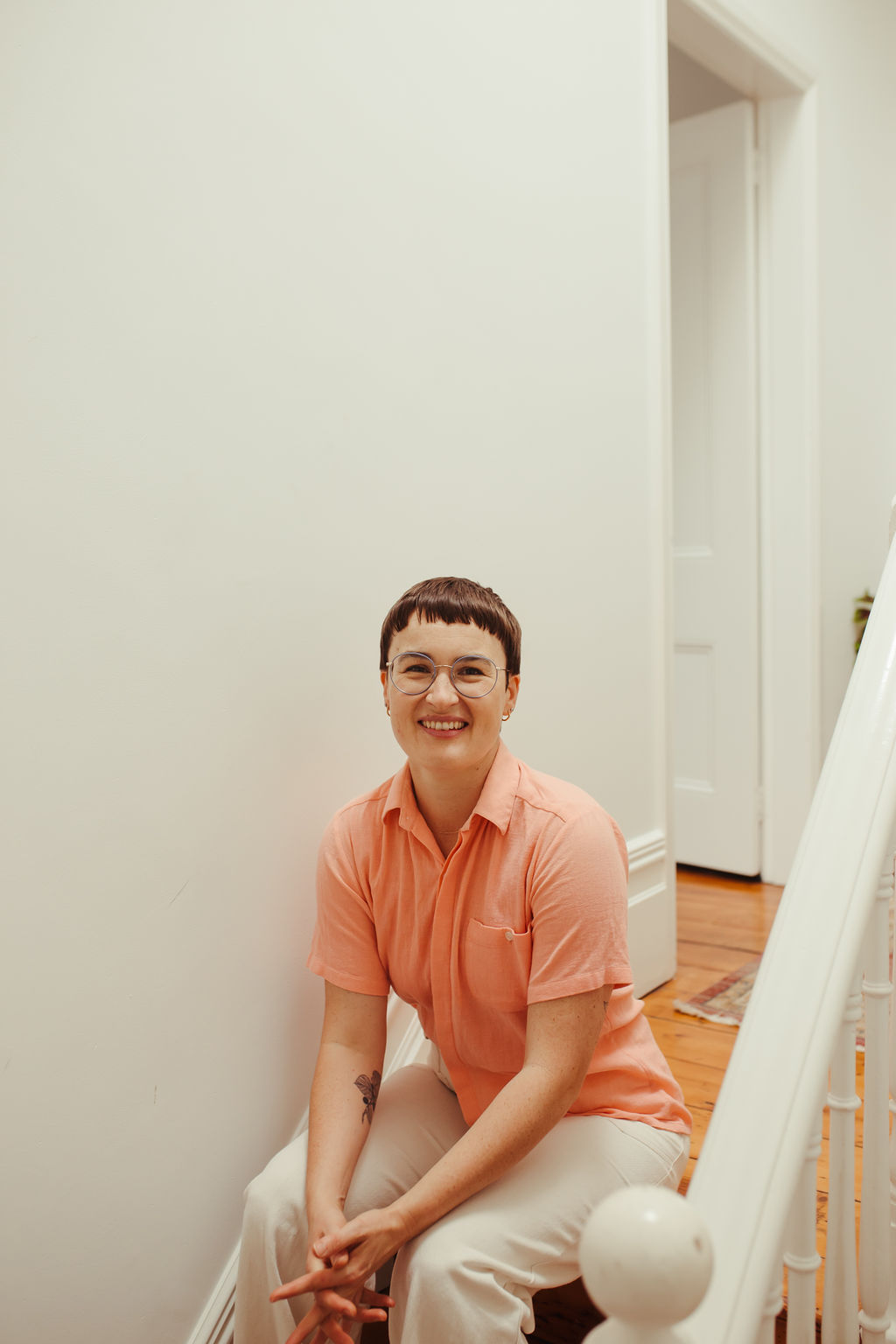
I am Chauncey Sjostedt (she/her), a PACFA certified psychotherapist in Sydney. I offer Gestalt psychotherapy and counselling to individual adults, in person in Surry Hills and Glebe and online across Australia. My work is trauma informed, body aware and affirming of every gender and sexuality.
Taking new clients. No waiting list and no GP referral. A free introductory call is available first if you would rather talk before booking.
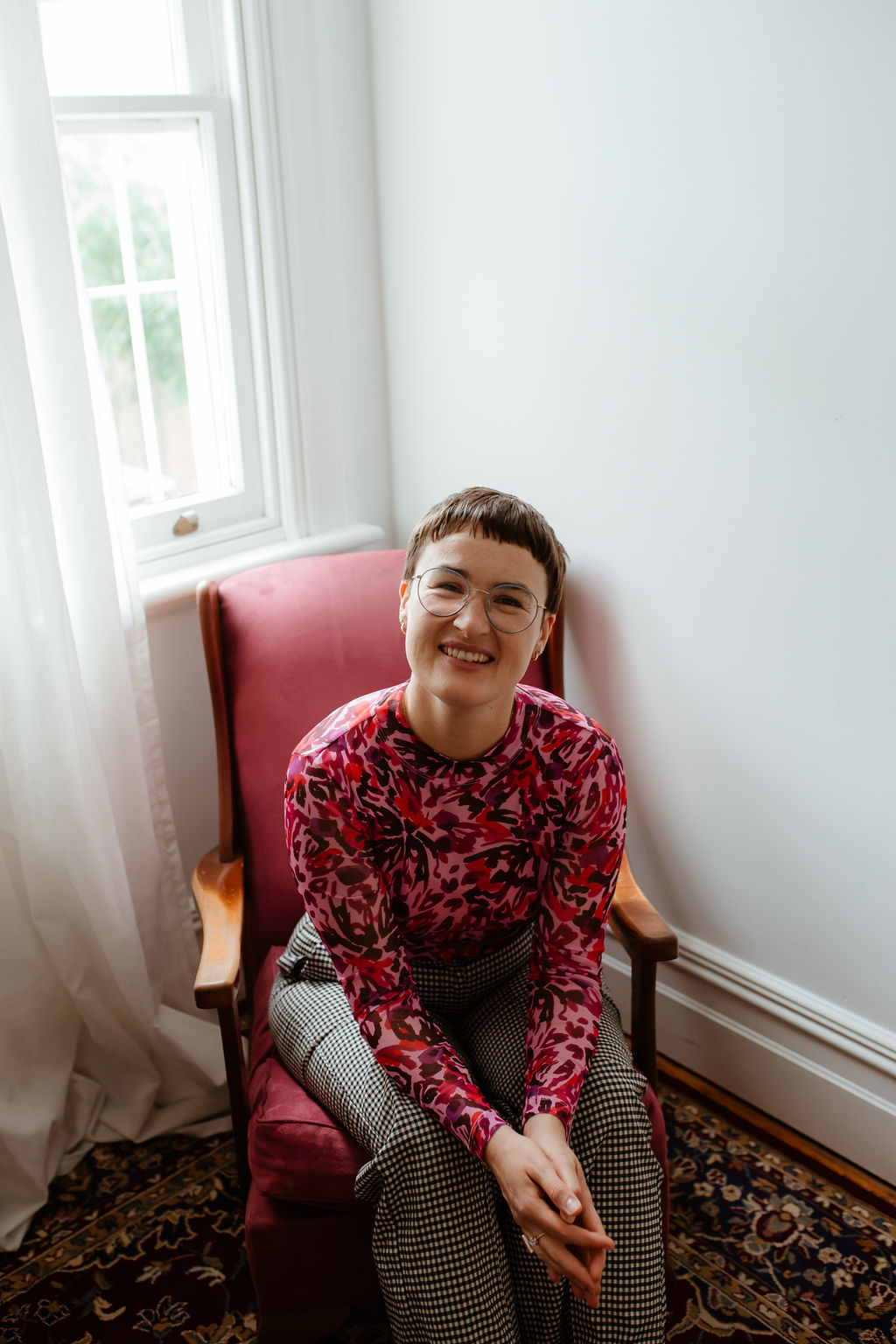
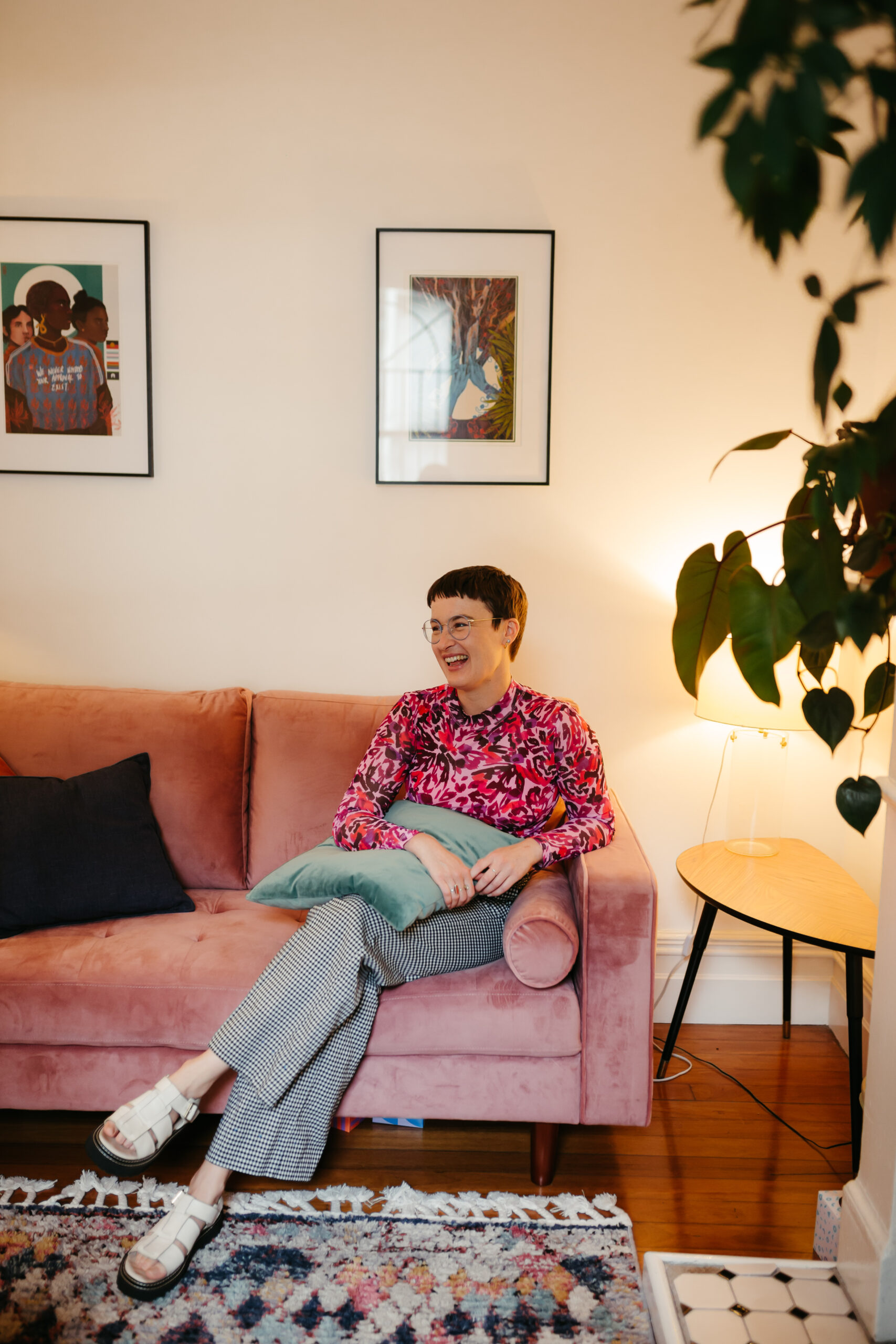
Who am I, and how do I work?
I work with what is happening in you right now, in your body as much as your thinking, rather than analysing your history from a distance.
I came to this from midwifery. For thirteen years I was a registered midwife, which taught me that people hold hard experiences physically long before they can describe them, and that being properly witnessed changes what those experiences become.
I am also a queer woman and part of the community I work with. In practice that means less of your energy goes on explaining yourself and more of it stays with you.
My undergraduate background is in anthropology and gender studies, and my clinical training is in Gestalt therapy. I treat identity as something shaped by culture and history rather than as a fixed fact, which matters in how I listen.
PACFA certified
Certified Practising Member #29367. Requires accredited training, clinical supervision and a code of ethics. Verify at pacfa.org.au.
Queer and affirming
A volunteer counsellor at ACON in Surry Hills. However you identify and however you partner, you will not be asked to account for it here.
Thirteen years a midwife
Clinical grounding in fertility, pregnancy, birth and early parenthood. You will not need to translate the medical parts for me.

What is Gestalt therapy?
Gestalt is a present focused, relational form of psychotherapy. Instead of talking about your life from a distance, we pay attention to what happens while you talk about it.
Not every psychotherapist in Sydney works this way. The word gestalt is German for whole or shape, and the approach treats a person in context rather than as a set of symptoms. In practice it usually means slowing down: noticing the catch in your breath, staying with a tightness a moment longer than is comfortable, saying the thing you were about to talk yourself out of. Most people already know their own patterns. What changes is their relationship to them.
 Present focused
We work with what is here now
Your history matters and we will go there, but the past only ever shows up in the present. That is the only place it can shift.
The body is part of it
Drawing on Somatic Experiencing and Polyvagal Theory, I track what happens physically as we talk. This is not bodywork and there is no touch involved.
Your nervous system sets the pace
Safety comes before anything is opened, and I will not push faster than is useful. Slow and thorough works better than fast and destabilising.
What happens between us counts
How you are with me tends to echo how you are with others, and noticing that as it happens is more useful than reconstructing it later. I also draw on Internal Family Systems and mindfulness.
What do I help with?
Most people do not arrive with a tidy category, and you do not need one. If what you are carrying is not listed, that is not a reason to stay away.
Anxiety, stress and burnout
The mind that will not stop scanning, and the flatness that arrives after months of pushing through.
Grief, loss and life changes
Not only bereavement. The end of a relationship, a role, or a future you had assumed.
Birth trauma and the perinatal year
Thirteen years of midwifery behind me, so the clinical parts will not need explaining.
Gender identity and diversity
Affirming, never gatekeeping. Your account of your own gender is the starting point.
LGBTQ+ affirming therapy
From inside the community, not adjacent to it. No educating me first.
Relationship patterns
Individual work on the dynamics that repeat and the boundaries that collapse.
Self-esteem and body image
The steady sense of not being quite enough, and a body that has been commented on for years.
Emotions too big or too flat
Flooding, shutting down, or swinging between the two with no steady ground.
Personal growth
You do not have to be in crisis. Wanting something different is reason enough.
Complex family dynamics
The roles you were handed and the things nobody named. Your family need not be involved.
Trauma informed therapy
Developmental, relational, complex and single event, worked with slowly.
Somatic and body aware work
For people who understand their patterns and still cannot shift them.
Who do I work with, and who do I not?
I would rather be clear before you spend money on a session. There are things I am genuinely not the right person for.
I work with
- Adults aged 18 and over
- Individuals, one to one
- Every gender and sexuality
- All relationship structures
- People with no diagnosis or referral
I am not right for
- Couples or joint sessions
- Family therapy or mediation
- Children and adolescents
- Crisis or urgent risk support
- Assessment, diagnosis or EMDR
My registration is with PACFA rather than AHPRA, and my training is in psychotherapy rather than clinical psychology, so no Medicare rebate applies. In exchange there is no cap on sessions and no diagnosis required. If you need something I do not provide, say so and I will point you somewhere useful.
What happens in a first session?
You do not need it organised before you arrive. Most people turn up with a rough sense of what is wrong and no clear words for it.
You get in touch
Message me, or ask for the free introductory call. I reply within 48 hours.
We find a time
I confirm by email and send an intake form to complete beforehand.
The first session
Fifty minutes, mostly a conversation, including whether we are a good fit.
You decide
No obligation to continue. Most people start weekly, then move to fortnightly.
Sessions after that have no fixed agenda. We begin with wherever you are that day and follow what has energy in it, which can feel unfamiliar if your previous therapy was more structured. Some sessions are full of talking. Others are quiet, and the work is staying with something rather than explaining it away. There is no homework and nothing to practise between appointments unless you want there to be.
You are also welcome to tell me when something is not landing, or when the pace is wrong. In this kind of therapy that is useful information rather than rudeness, and it often turns out to be the most productive thing said all session.

How do sessions actually work?
The details people usually want before enquiring, in one place.
| Detail | How it works |
|---|---|
| Session length | 50 minutes. Longer sessions can be arranged on request. |
| Who attends | One person. Individual adults 18 and over. No couples, family or group sessions. |
| How often | Many people begin weekly, then move to fortnightly. Reviewed as we go, never locked in. |
| Referral | Not needed. No GP referral, Mental Health Care Plan, diagnosis or waiting list. |
| Medicare | Not available. I am a psychotherapist and counsellor, not a psychologist. |
| Private health | Depends on your fund and cover. Ring them first and quote membership #29367. Itemised receipts provided. |
| Fees | Not published here. Email me and I will send the current rate. If cost is a real barrier, say so. |
| Payment | Bank transfer or card, on the day or beforehand. |
| Cancellations | 48 hours notice so the time can go to someone else. Later cancellations may attract a fee. |
Where do you see a psychotherapist in Sydney, and can it be online?
Two consulting rooms in inner Sydney, plus secure video for anyone further afield. You can move between formats as your weeks change. The Surry Hills rooms are roughly a ten minute walk from Central Station, and the Glebe rooms suit anyone coming from Newtown, Camperdown or Annandale.
Surry Hills
Suite 324, 410 Elizabeth StreetSurry Hills NSW 2010
9:00am to 2:00pm
Glebe
Genki Centre, 1 Arundel StreetGlebe NSW 2037
2:00pm to 7:00pm
Online, Australia wide
Secure encrypted videoSame hours as in person
Anywhere in Australia
Does online therapy work as well?
For most people and most presentations, yes. The strongest predictor of whether therapy helps is the relationship between the two people in it, and that builds over video. You will need somewhere private, a connection that holds up and a camera. Where being in the room together would genuinely be better, I will say so when we talk rather than after you have booked.
Do I have to be in crisis to start therapy?
No. Waiting until things are bad enough to justify it is one of the most common reasons people put this off for years.

Something is off and you cannot name it
No clear story attached. Finding the words is part of the work.

You know the pattern and it repeats
Insight has not changed it. That gap is what body aware work is for.

Something is changing
A move, a birth, a break up, an identity coming into focus.

Frequently asked questions
Do I need a GP referral to see you?
No. You do not need a GP referral, a Mental Health Care Plan, a diagnosis or any other documentation. You contact me directly and we arrange a time. There is no intake process to get through and no waiting list.
Can I claim Medicare or use a Mental Health Care Plan?
No. I am a PACFA certified psychotherapist and counsellor rather than a psychologist, so Medicare rebates and Mental Health Care Plans do not apply. The trade off is no limit on sessions and no diagnosis required. Some private health funds pay a rebate at my level of PACFA membership, so check your cover and quote #29367.
What does PACFA certified actually mean?
PACFA is the Psychotherapy and Counselling Federation of Australia, the peak professional body for the field here. Certified Practising Membership is its highest level and requires accredited training, ongoing clinical supervision, annual professional development and a code of ethics. It also gives you a formal complaints process. My membership number is #29367 and can be verified on the PACFA website.
Do you offer couples counselling?
No. I work with individuals only and do not offer couples, family or joint sessions. Individual therapy is often more useful for relationship difficulties than people expect, because understanding your own patterns changes what happens in your relationships even when nobody else is in the room. If couples work is what you need, ask and I will suggest a referral.
Is this practice genuinely LGBTQ+ affirming?
Yes, personally as well as professionally. I am a queer woman and a member of the community, and I volunteer as a counsellor at ACON in Surry Hills. You will not need to explain your identity, justify your relationships, or spend session time educating me. Every gender identity, sexuality and relationship structure is welcome, including non-monogamous arrangements.
Can I work with you if I live outside Sydney?
Yes. Online sessions are open to anyone in Australia, and a number of the people I see are regional, interstate, or somewhere that affirming and trauma informed therapy is hard to find locally.
What happens to what I tell you?
What you say stays between us. As a PACFA Certified Practising Member I am bound by their code of ethics, which sets out my confidentiality obligations and the narrow legal limits on them, such as a serious and immediate risk to someone's safety. I also attend regular clinical supervision, which is a professional requirement and is itself confidential.

Book a session, or just ask a question
You do not need to arrive with everything worked out. Send a message, ask for the free introductory call, or book a first session and we will find out whether this is a good fit. Gestalt psychotherapy in Sydney, in Surry Hills, Glebe or by video wherever you are.